
🌳Tree of the Month for May 2026
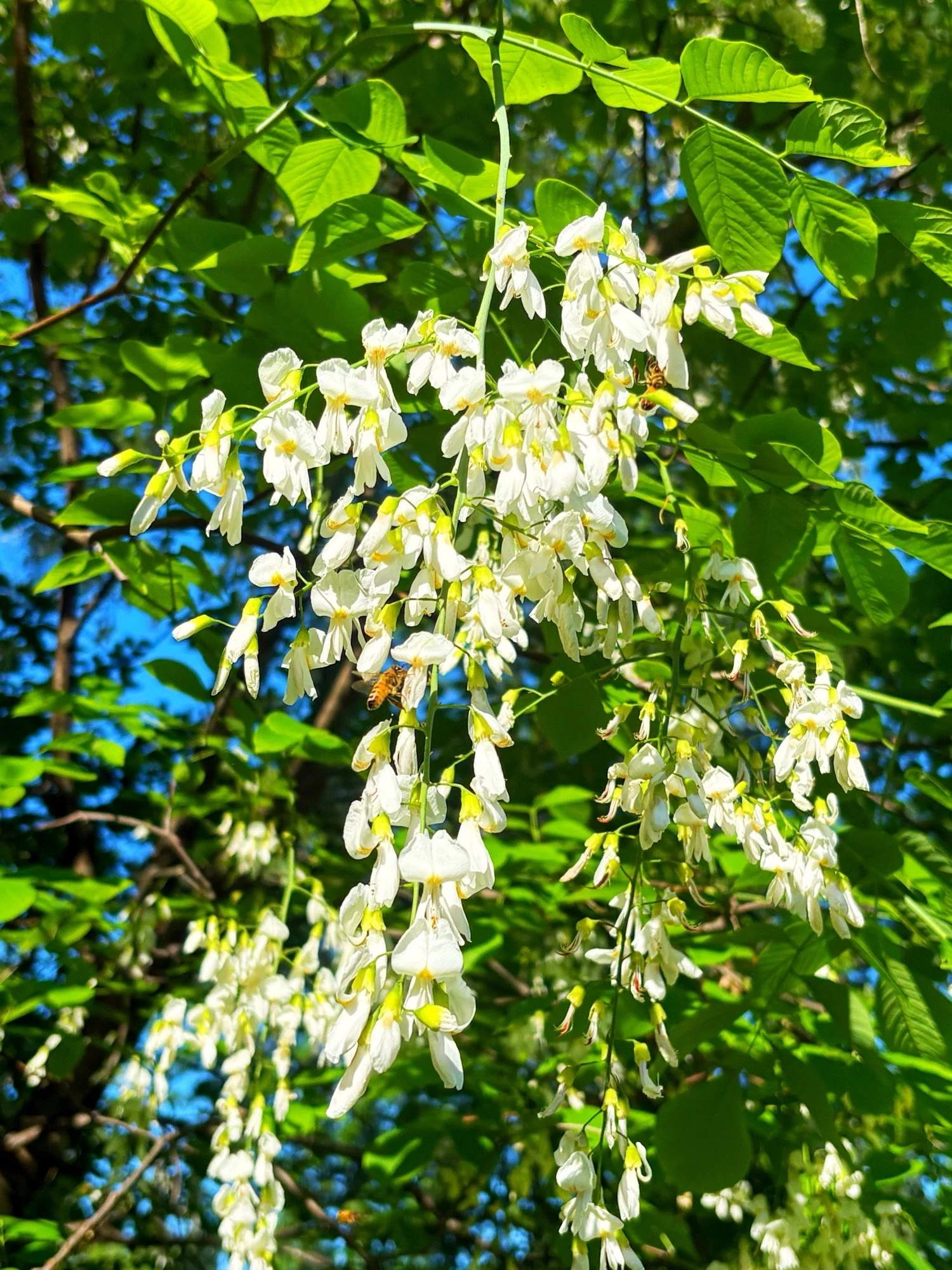
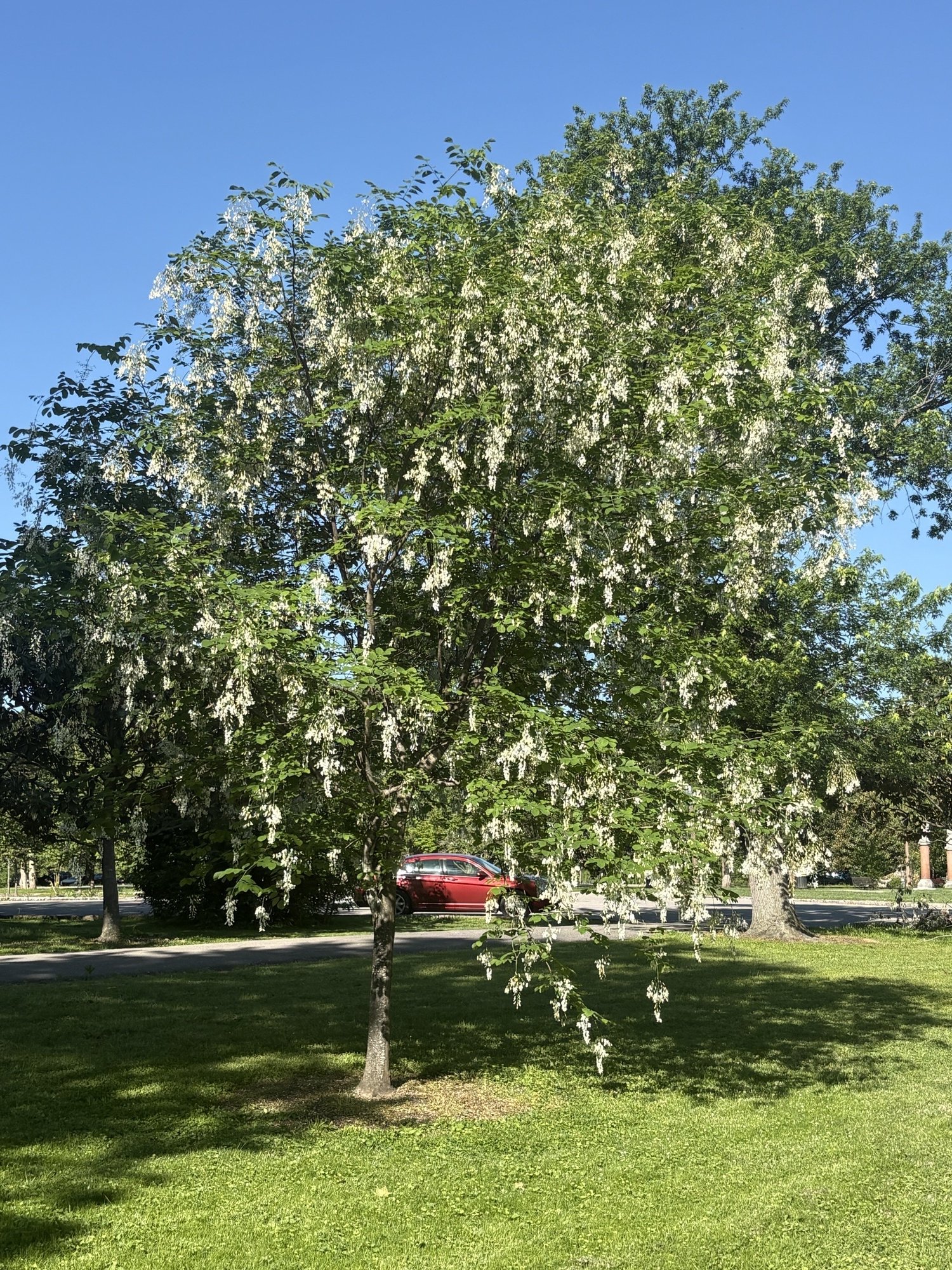
Howdy, parkgoers! It is once again time for our Tree of the Month. For the month of May, we are highlighting one of our most spectacular native tree species: the American yellowwood.
Cladrastis kentukea, commonly called the American yellowwood, is a medium-sized deciduous tree with an open, graceful, and spreading canopy, and can be expected to grow 30–50 feet tall with a canopy width of 40–55 feet. American yellowwood can be an absolutely stunning specimen that offers multi-season interest; it is known for its large pinnately compound foliage, panicles of fragrant white flowers, ornamental seed pods in autumn, and vibrant yellow fall color.
The species is native to a large area of the eastern/southeastern United States, including our home state of Missouri, where it typically occurs in southwestern counties near the White River and its tributaries. Its compound foliage (usually 7–11 leaflets) emerges yellowish-green, matures to a bright green color throughout the growing season, and turns a vibrant yellow in the fall before the tree sheds its foliage for dormancy.
The flowers of yellowwood bloom in late April and May and are intensely fragrant, wisteria-like white flowers in large, drooping, terminal panicles ranging from 10–15 inches long. The flowers will cover the entire canopy of the tree. Profuse blooms may occur only once every 2–3 years, and newly transplanted trees may not bloom for the first 8–10 years. The flowers of yellowwood are similar in appearance to our native black locust (Robinia pseudoacacia). The flowers give way to flat seed pods that mature in September and October.
The wood of this species contains a yellow dye that creates a distinctive yellow color in its heartwood; this is the source of its common name, yellowwood.
American yellowwood is generally a tough species, but some issues may be present. Yellowwood is susceptible to verticillium wilt, sunscald, and bloom damage from late frosts in some areas, and its branching structure can be fragile and vulnerable to damage from high winds and winter storms.
This species is an amazing specimen to have in parks, but it is also an excellent choice for homeowners and private landowners. Its roots grow deep, which allows for planting near patios or terraces and supports easier understory plantings to add layers to your landscape designs.
The arboretum at Tower Grove Park currently has 27 yellowwood specimens. Keep an eye out for them as you explore our beautiful park; they are truly one of the most beautiful species found within Tower Grove Park.