🌳Tree of the Month for July 2026
Howdy, park-goers! It's time for our July 2026 Tree of the Month. This month we're highlighting one of Missouri's mightiest native trees: the Shagbark Hickory (Carya ovata).
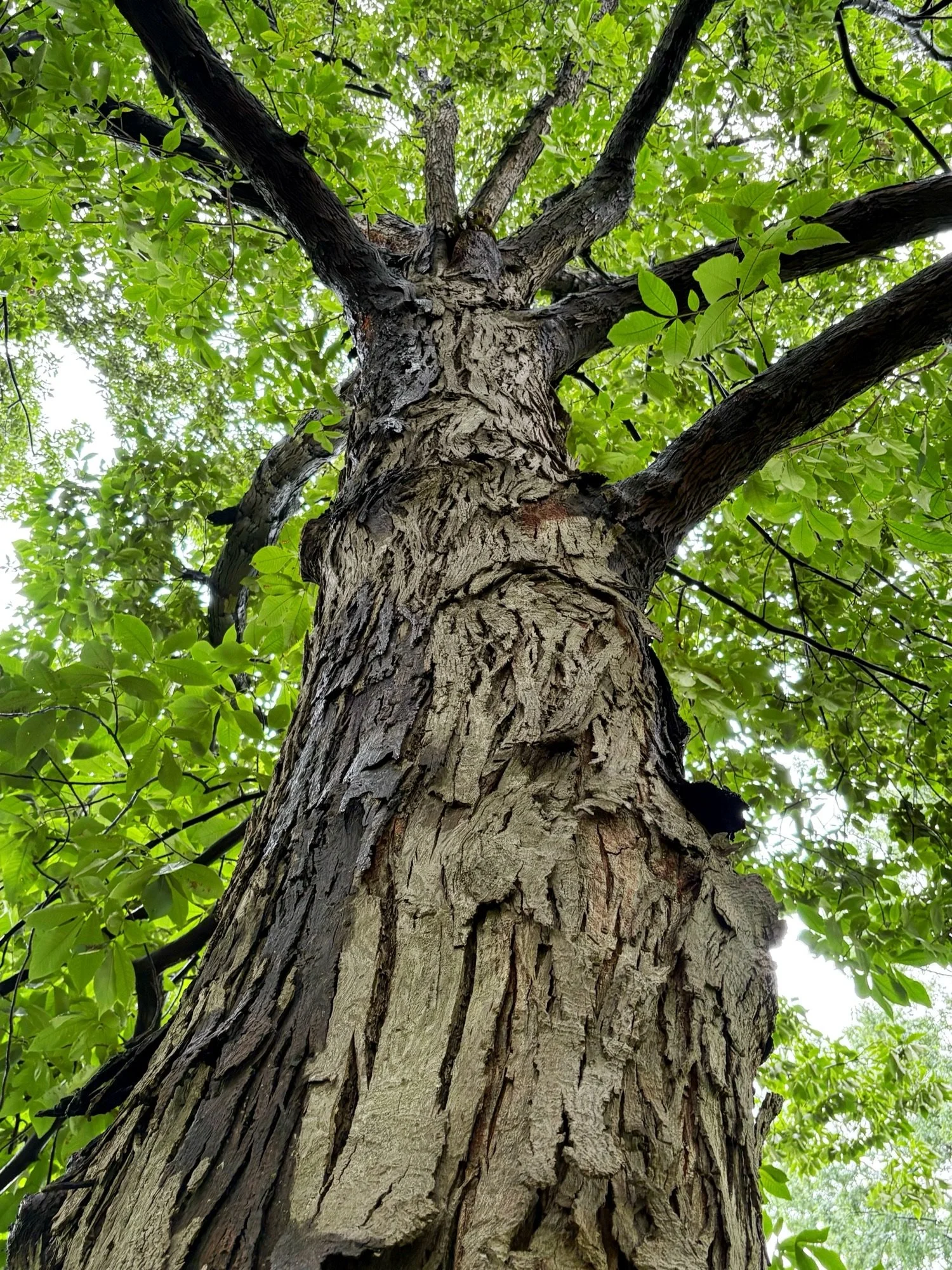
Shagbark hickory gets its common name from the long, shaggy strips of bark that peel away from the trunk as the tree matures, creating one of the most distinctive silhouettes in the forest. Native to a broad region of North America, this impressive species grows from southern Quebec west to Minnesota and throughout the Appalachian Mountains, the central hardwood forests, and much of the American South. It thrives in a wide range of habitats, from dry upland forests to moist valleys and bottomland woodlands.
A mature shagbark hickory is an impressive sight. These large deciduous trees typically reach 70–90 feet tall with a 50–70 foot canopy spread, though exceptional specimens can exceed 100 feet in height. The tallest recorded shagbark hickory, located in Savage Gulf, Tennessee, stands more than 150 feet tall. With broad, irregularly rounded crowns and trunks that can exceed 3 feet in diameter, these trees have long been valued as an important timber species.
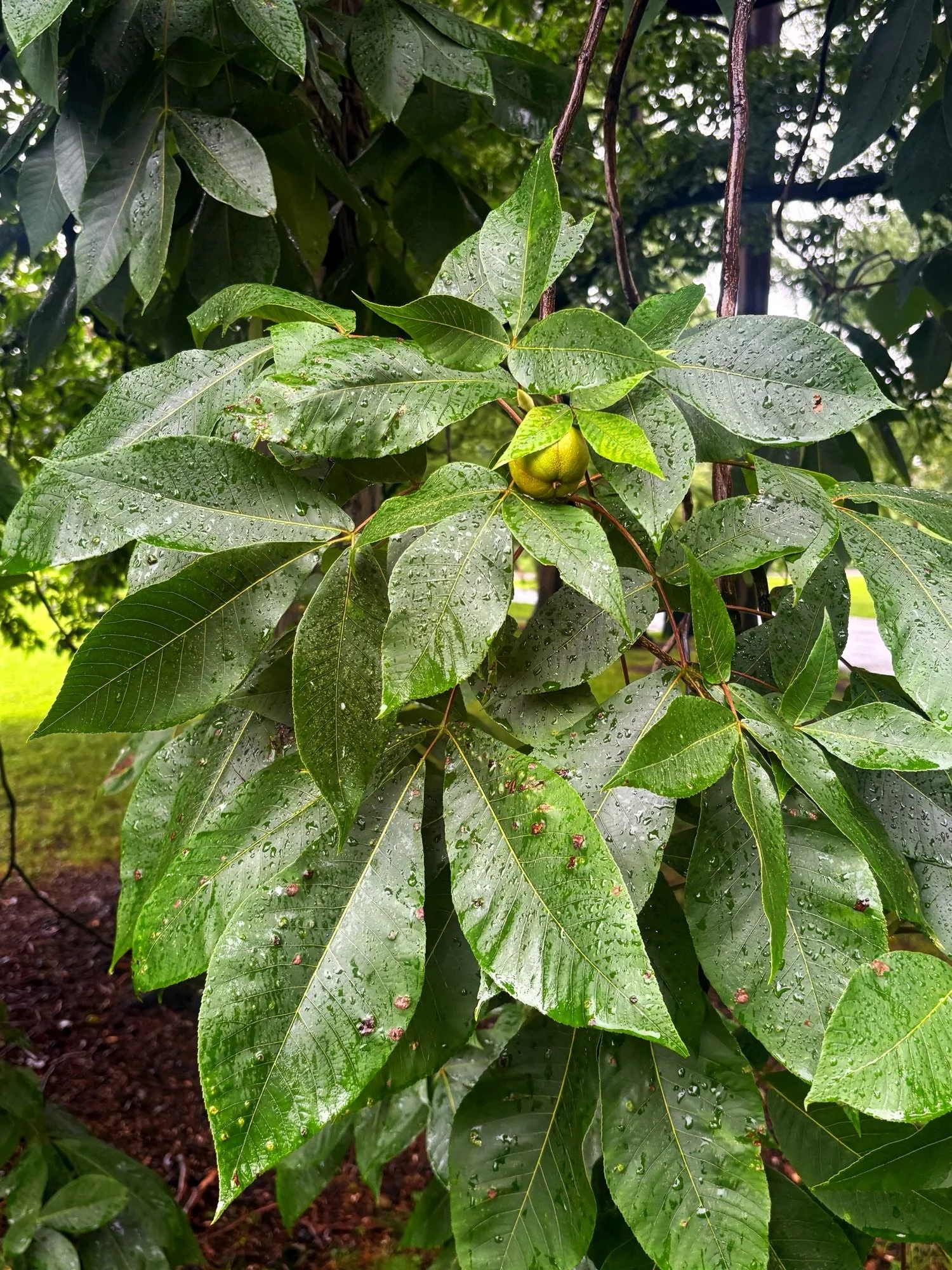
The leaves are smooth, medium yellow-green, and compound, with an odd number of leaflets—most commonly five, but sometimes seven or even nine. In autumn, the foliage transforms into beautiful shades of golden yellow and warm brown, adding seasonal color to the landscape.
Like other hickories, Carya ovata produces edible nuts after its spring flowers fade. Each nut develops inside a thick husk that naturally splits into sections when ripe. These nutritious nuts have been enjoyed by people for centuries and remain an important food source for wildlife, including squirrels, chipmunks, wild turkeys, and other forest animals.
Beyond its ecological value, shagbark hickory has long been prized for its exceptionally strong wood. It has traditionally been used for smoking and curing meats, firewood, tool handles, ladders, furniture, and other products requiring durability and strength.
Find It in the Park
Shagbark hickory is one of several hickory species growing throughout the Arboretum at Tower Grove Park. There are five specimens in the Park, and they're easy to spot thanks to their unmistakable shaggy, peeling bark. The next time you're exploring the Arboretum, keep an eye out for these remarkable native giants.