🌳Tree of the Month for June 2026
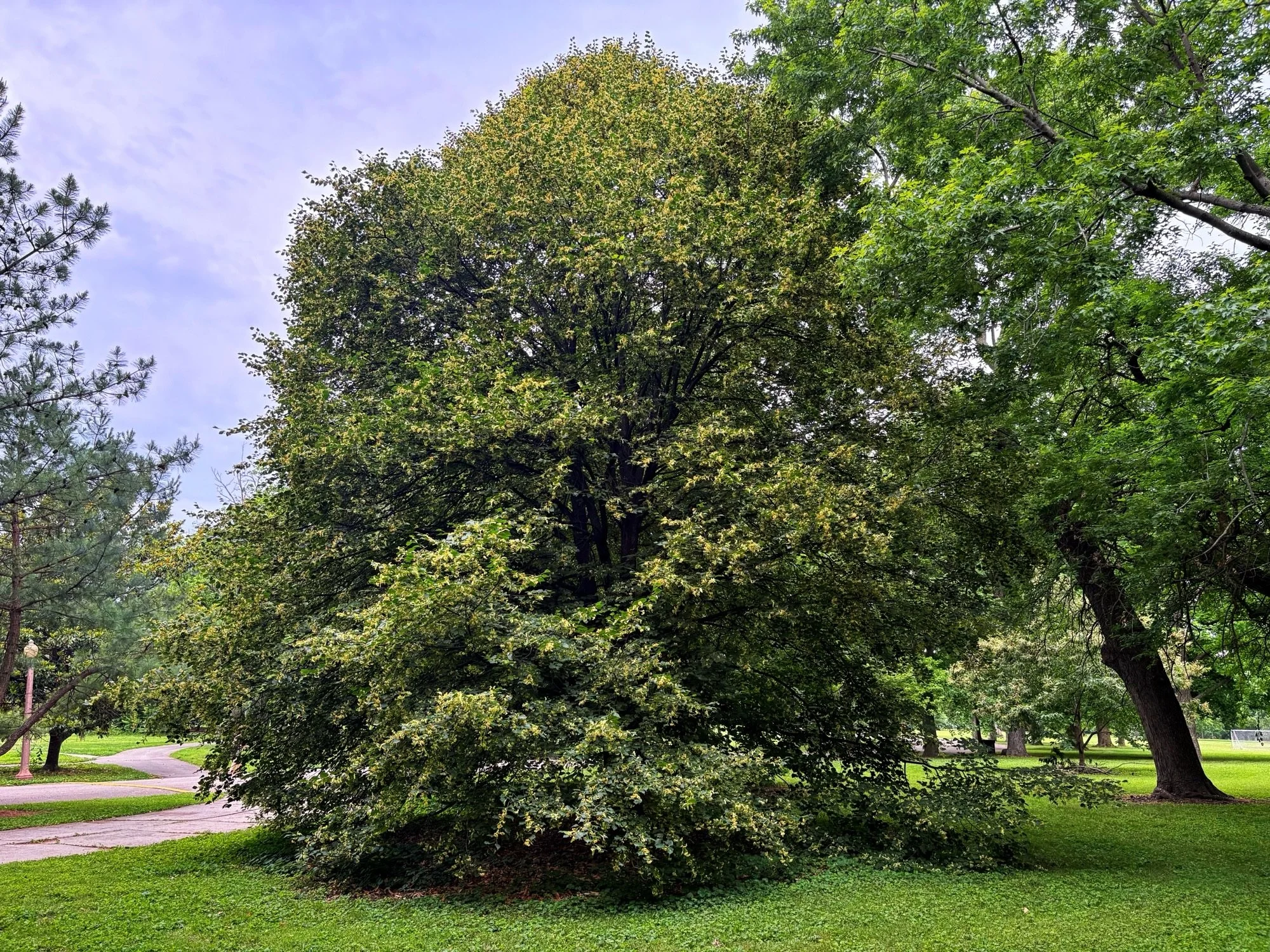
Howdy, park-goers! It is time for the June 2026 Tree of the Month. This month we are highlighting Tilia cordata, which is commonly called littleleaf linden.
This species is native to Europe, western Siberia, and Iran, with records documenting its cultivation dating back as early as 760 AD. Tilia cordata, commonly known as Littleleaf Linden, is a medium-sized broadleaf deciduous tree in the Malvaceae family. At maturity, it typically reaches 50–70 feet in height with a canopy spread of 35–50 feet.
Internationally, Tilia cordata is widely regarded as one of the finest linden species due to its attractive form, adaptability, and ornamental value. Although it is not native to North America, it has been extensively planted throughout the United States as a shade and landscape tree, where it is valued for its dense canopy, fragrant flowers, and tolerance of urban conditions.
Tilia cordata, or Littleleaf Linden, is an excellent choice as a shade tree for private landscapes, parks, and large open spaces. However, it is generally not recommended as a street tree, as its use in these settings has been associated with stunted growth, leaf scorch, and susceptibility to windthrow. Due to its exceptional tolerance for pruning, this species has also been widely used throughout Europe for formal hedges and landscape designs.
Littleleaf Linden thrives in full sun to partial shade and prefers moist, well-drained loamy soils. While it performs best under these conditions, it is highly adaptable to a variety of soil types and demonstrates good tolerance for urban environments. The tree develops a dense canopy with low branching and typically exhibits a pyramidal to broadly ovate form.
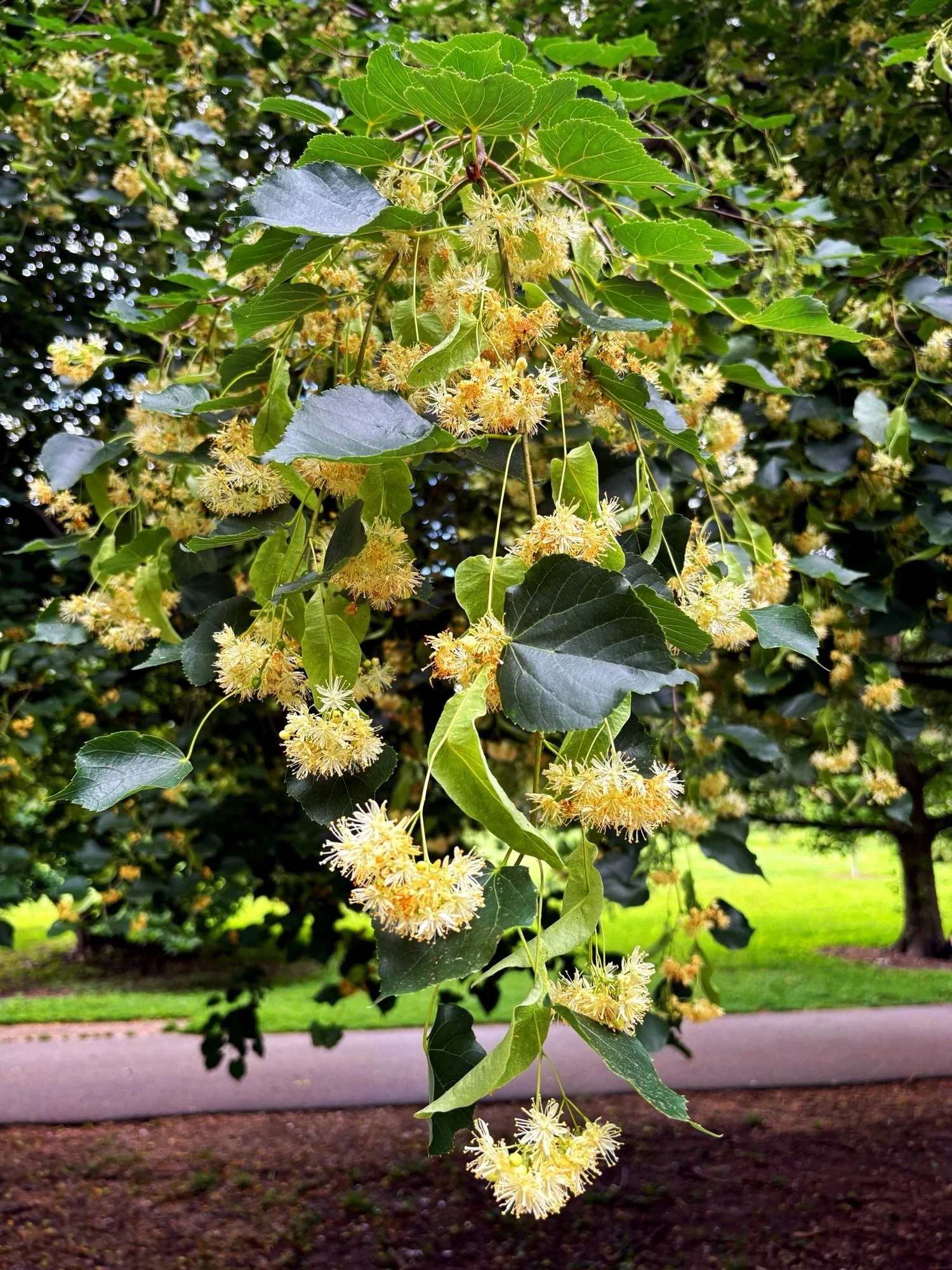
The foliage is attractive throughout the growing season. Leaves are glossy, alternate, and range from light to dark green with paler undersides and finely serrated margins. They are ovate in shape with a distinctive heart-shaped (cordate) base and measure approximately 1.5–3 inches in both length and width.
Tilia cordata is perhaps best known for its showy and fragrant flowers. Creamy yellow blossoms emerge in June and may persist into early July. The flowers hang in pendulous clusters of five to seven blooms attached to a distinctive strap-like bract. Their sweet fragrance is often compared to that of honeysuckle and attracts a variety of pollinators, including bees, butterflies, and hummingbirds.
Following the flowering period, the tree produces small, rounded, hairy nutlets that also hang in pendulous clusters. These fruits begin as pale green and gradually mature to a light tan color.
Beyond its ornamental beauty and value to pollinators, Littleleaf Linden serves as an important habitat tree for birds. Its relatively soft wood and deep branch unions provide excellent nesting sites for cavity-dwelling species.
This species also holds a rich place in European folklore and mythology. In Germanic and Norse traditions, the linden was considered the favorite tree of Freya and Frigg, goddesses associated with love, fertility, and domestic life. Young women were said to dance around and embrace the trees in hopes of receiving blessings of fertility. At the same time, Scandinavian folklore warned against approaching linden trees at night, as they were believed to be inhabited by elves and fairies.
Tilia cordata is truly a remarkable shade tree, offering beauty, ecological benefits, and a fascinating cultural history. Tower Grove Park is home to 54 specimens of this species throughout the arboretum. If you visit the park this month, be sure to seek them out and enjoy their stunning floral displays and sweet fragrance while they are in bloom.